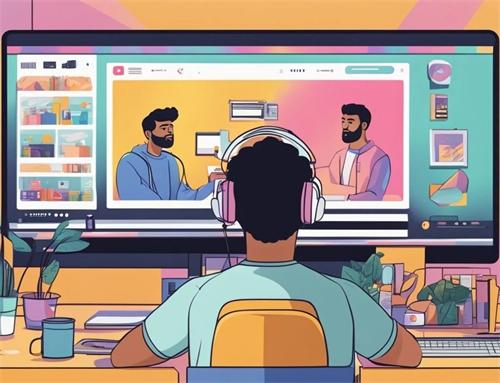
If you’ve ever watched a teenager debate fiercely over a Twitter thread but struggle to resolve a disagreement with a friend face-to-face, you might have glimpsed what psychologists and educators are calling a modern paradox: “digital empathy” without real-world social fluency. In other words, younger generations might be incredibly skilled at reading, reacting to, and even performing empathy online, but when it comes to eye contact, tone, or subtle emotional cues in the real world, their abilities sometimes fall short.
What is “Digital Empathy”?
Empathy, at its core, is the ability to understand and share the feelings of another person. Traditional empathy involves face-to-face interactions, where body language, vocal tone, facial expressions, and even micro-expressions play crucial roles. You can sense the hesitation in a friend’s voice, notice when someone’s posture signals insecurity, or feel the tension in a room without a single word being spoken.
Digital empathy, however, operates in a different domain. Online, empathy is often expressed through written words, emojis, reaction buttons, or carefully curated social media responses. Think of someone posting a heartfelt story and getting a cascade of supportive comments like “I feel you 😢” or “Sending love ❤️.” The emotional intent is recognized and validated—but it’s simplified. The rich texture of human interaction—the nuanced hesitation, the awkward pause, the shared laughter—is largely missing.
This isn’t inherently bad. Digital platforms have allowed empathy to reach people who might otherwise feel isolated. Teenagers can support friends across countries, and movements like #MeToo show how collective online empathy can drive real-world awareness. But the question remains: is online empathy enough to cultivate fully functional interpersonal skills?
Why Digital Communication Changes How We Learn Empathy
Our brains are wired to respond to subtle social cues. From birth, humans learn to interpret others’ emotions through direct interaction. A smile, a frown, a gentle touch—these are all signals our brains process subconsciously, forming the foundation for emotional intelligence.
Digital communication changes this learning process in three major ways:
1. Reduced Non-Verbal Cues
Texting, social media, and even video calls can’t fully replicate in-person interactions. Subtle things like microexpressions, timing of gestures, and tone modulation are either missing or filtered. As a result, young people might become adept at interpreting emojis or typing patterns, but less skilled at reading real-world cues like a nervous glance or shifting body language.
2. Delayed Feedback Loops
Online interactions often give delayed feedback. You post something, and hours later, you see likes or comments. This delay can train the brain to respond to abstract approval signals rather than the immediate, instinctive feedback of a face-to-face conversation. In-person, emotional responses are instantaneous—your brain learns cause-and-effect relationships in empathy. Online, those relationships can feel less tangible, less visceral.
3. Curated Social Presentation
Social media encourages carefully edited self-presentation. People rarely show themselves in raw, unpolished emotional states. This curation can make it harder for young people to experience and respond to authentic vulnerability, which is key to real-world empathy. Empathy online becomes a skill of recognition—identifying the “right” thing to say—rather than full, relational engagement.
Evidence of Impoverished Real-World Social Skills
Recent research points to some concerning trends. Psychologists and educators have noticed that digital natives—people who have grown up with smartphones and social media—often struggle with skills that were once considered baseline:
> Conflict Resolution: Young people are more likely to retreat from face-to-face disagreements. They might block, ghost, or reply passively aggressively rather than talking things out.
> Reading Social Cues: Studies suggest that teenagers’ ability to detect emotion in faces and voices is slightly declining, likely due to more time spent communicating in text-based formats.
> Attention Span and Conversational Flow: Rapid-fire texting and social media scrolling encourage short, fragmented attention. This makes sustaining nuanced, deep conversations harder.
> Tolerance for Discomfort: Digital communication often removes the awkwardness that comes with disagreement or confrontation. In real life, learning to sit with someone else’s discomfort is a critical social skill; online, it’s often skipped.
It’s important to note that not every young person experiences these deficits, and many adapt well. But as a population trend, psychologists are calling attention to the risks.
The Paradox of “Empathy Performance”
One striking phenomenon in digital empathy is what researchers call “empathy performance.” Online, people often demonstrate empathy perfectly in a performative sense—they write the correct supportive messages, share the right memes, or participate in trending social causes. Yet, when challenged in the real world, their emotional literacy may falter.
Think about the friend who shares heartfelt advice on Instagram but can’t notice when their roommate is quietly struggling. Or the teenager who passionately supports anti-bullying campaigns online but resorts to gossip or teasing in the classroom. These are not moral failings—they reflect the cognitive and emotional differences between mediated and unmediated social interaction.
Performative empathy is not useless. It still fosters community and awareness. But relying solely on digital channels can leave young people less prepared for the unpredictability and messiness of in-person relationships.
Why This Matters Beyond the Personal
1. Workplace Success
In professional settings, emotional intelligence is often as important as technical skill. Negotiating, presenting ideas, leading teams, and managing conflict all require nuanced social perception that text-based empathy can’t fully replace.
2. Mental Health
Research consistently links strong social skills with better mental health. Feeling understood and able to communicate effectively in person buffers against anxiety, depression, and loneliness. Overreliance on digital empathy may leave young people feeling socially competent online but emotionally isolated offline.
3. Civic Engagement
Real-world empathy drives action in communities. Voting, volunteering, and advocacy often require negotiating complex interpersonal dynamics. Without offline social fluency, digital engagement may remain symbolic rather than transformative.
How We Can Foster Balanced Empathy
The solution isn’t to demonize technology—it’s to teach balance. Young people don’t need to abandon smartphones; they need guidance in integrating digital and real-world social skills. Here are some practical strategies:
1. Encourage Face-to-Face Practice
Schools and families can create environments where in-person interaction is nurtured. Group projects, role-playing exercises, or simple activities like sharing meals together allow young people to read and respond to real-time social cues.
2. Teach Emotional Literacy Explicitly
Some skills that used to be learned organically now need intentional teaching. Parents and educators can help children recognize emotions in faces and voices, understand body language, and articulate feelings.
3. Use Technology Mindfully
Encourage young people to reflect on online interactions. For example, after a supportive comment online, ask: “How would you express this in person?” or “What might it feel like for someone to hear this face-to-face?” This bridges digital empathy and real-world application.
4. Normalize Vulnerability and Conflict
Digital spaces often reward polished responses and discourage messy, uncomfortable emotions. Families and classrooms can model that it’s okay to disagree, to struggle, and to apologize in person. This helps strengthen resilience and emotional regulation.
5. Balance Screen Time and Offline Engagement
It’s tempting to think that digital natives can “multi-task” their social lives online and offline. But social skills, like muscles, need consistent exercise in real-world settings. Scheduling device-free time for conversations, play, and group activities reinforces these muscles.
A Balanced Perspective
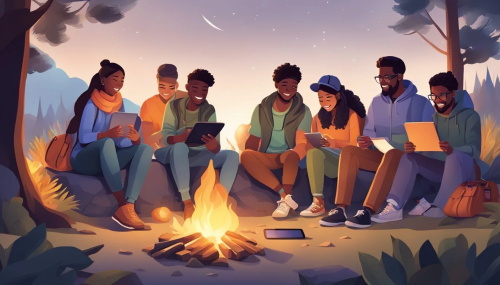
It’s tempting to frame this as a generational crisis: “The kids these days are losing their social skills!” But that’s overly simplistic. Digital empathy is a genuine evolution, not a moral failing. It shows that human beings adapt quickly to new modes of communication, creating new forms of connection in a complex, interconnected world.
The challenge is integration, not eradication. The goal is to cultivate hybrid empathy: the ability to engage online with awareness and authenticity while retaining the rich, nuanced social fluency that face-to-face interactions demand. By guiding young people through both digital and offline social landscapes, we can help them thrive emotionally, socially, and professionally.
References
1. Uhls, Yalda T., et al. Five Days at Outdoor Education Camp without Screens Improves Preteen Skills with Nonverbal Emotion Cues. Computers in Human Behavior, vol. 39, 2014, pp. 387–392.
2. Konrath, Sara, et al. Changes in Dispositional Empathy in American College Students Over Time: A Meta-Analysis. Personality and Social Psychology Review, vol. 15, no. 2, 2011, pp. 180–198.
3. Turkle, Sherry. Reclaiming Conversation: The Power of Talk in a Digital Age. Penguin Books, 2015.
4. Przybylski, Andrew K., and Netta Weinstein. Can You Connect with Me Now? How the Presence of Mobile Communication Technology Influences Face-to-Face Conversation Quality. Journal of Social and Personal Relationships, vol. 30, no. 3, 2013, pp. 199–217.
5. Rosen, Larry D., et al. The Impact of Technology on Adolescents’ Face-to-Face Communication and Mental Health. Journal of Adolescence, vol. 55, 2017, pp. 1–9.