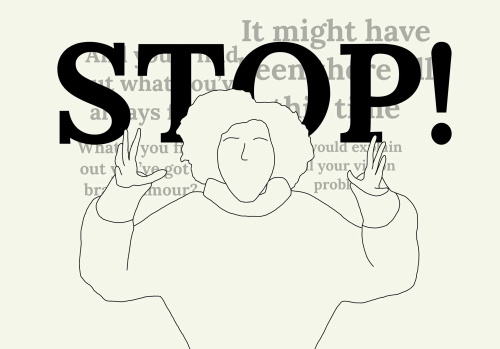
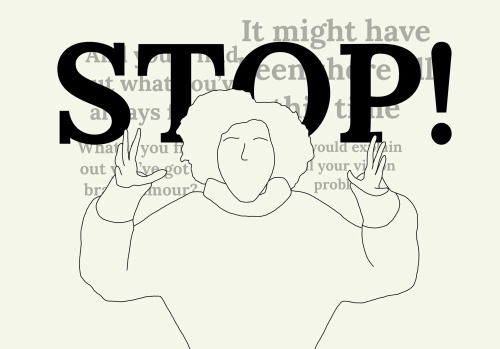
In modern life, overthinking has quietly become a widespread psychological pattern—almost a silent epidemic. It does not only emerge during major life decisions; more often, it hides in everyday moments: replaying a social interaction again and again, excessively analyzing a relationship, harshly judging one’s performance after a work presentation, or endlessly dissecting a casual remark from someone else.
Overthinking is typically defined as repetitive, persistent analysis of a problem, decision, or situation without reaching a clear conclusion or taking meaningful action. On the surface, it may appear that we are being thoughtful or thorough. In reality, however, overthinking often leads to heightened anxiety, emotional exhaustion, and mental paralysis—while the original problem remains unresolved.
Why does the brain get stuck in this loop? Why does thinking, which should help us adapt and solve problems, sometimes turn against us? To understand overthinking, we need to look beneath the surface and examine how the brain, emotions, and cognition interact.
1. Why the Brain Refuses to Rest: The Role of the Default Mode Network
From a neuroscientific perspective, overthinking is closely linked to a brain system known as the Default Mode Network (DMN).
The DMN becomes active when the brain is not focused on an external task. It is involved in self-reflection, recalling the past, imagining the future, and constructing mental narratives. When you are daydreaming, replaying conversations, or envisioning “what might happen,” your DMN is at work.
Problems arise when this network becomes overactivated. Excessive DMN activity can trap individuals in cycles of rumination—particularly negative or trivial thoughts. Research has consistently shown that people experiencing anxiety or depression tend to exhibit heightened DMN activity, making them more vulnerable to overthinking.
In other words, overthinking is not simply a lack of willpower. It is often the result of the brain becoming stuck in a self-referential loop, replaying internal content without meaningful resolution.
2. From Survival Mechanism to Mental Trap
Human cognition evolved as a survival tool. Our brains are designed to identify patterns, predict risks, and anticipate future threats. This capacity once helped our ancestors avoid danger and increase their chances of survival.
Overthinking, however, represents a maladaptive extension of this system.
When faced with uncertainty, the brain instinctively seeks control. It begins analyzing every possible outcome in the hope that more thinking will lead to greater safety. We often tell ourselves, “If I think this through thoroughly enough, I can prevent mistakes or avoid the worst-case scenario.”
This belief creates what psychologists call a “control illusion.” While thinking can help in structured problem-solving, excessive rumination rarely increases accuracy or control. Instead, it drains cognitive resources and amplifies anxiety.
Many modern stressors—career choices, relationships, social evaluation—lack clear answers. Overthinking them does not reduce uncertainty; it often magnifies it.
3. Cognitive Biases That Fuel Overthinking
Overthinking does not occur randomly. It is reinforced by specific cognitive distortions that subtly shape how we interpret reality:
> Catastrophic thinking: Automatically imagining the worst possible outcome
> Overgeneralization: Interpreting a single failure as proof of overall incompetence
> Selective attention: Searching for evidence that confirms fears while ignoring contradictory information
During overthinking episodes, individuals often engage in “evidence hunting” to validate their anxiety. For example, someone who doubts their competence may repeatedly recall moments that support this belief while dismissing successes or positive feedback.
This creates a self-reinforcing cycle: the more one thinks, the more convincing the negative narrative becomes—regardless of its accuracy.

4. Personality Traits That Increase Vulnerability
Certain personality characteristics are strongly associated with overthinking:
> Perfectionism
> High need for control
> Low tolerance for uncertainty
> Strong sense of responsibility
People with these traits often believe that thorough analysis is necessary to prevent failure. As a result, they mentally simulate countless hypothetical scenarios, attempting to anticipate every possible outcome.
Ironically, this constant forecasting does not increase preparedness. Instead, it multiplies uncertainty and emotional distress. The more possibilities the mind generates, the harder it becomes to act.
5. When Thinking Becomes a Burden: A Real-Life Cost
A friend once prepared for an important job interview. Objectively, she was a strong candidate. Yet in the days leading up to the interview, her mind became flooded with imagined failure scenarios. She analyzed every possible question, every facial expression the interviewers might make, and every way the conversation could go wrong.
By the time the interview arrived, she was mentally exhausted and overwhelmed with anxiety. Her performance suffered, and she lost an opportunity that could have changed her career trajectory.
This is the hidden cost of overthinking: what should be an opportunity for growth becomes a psychological burden, undermining confidence and performance.
6. Emotional Amplification: Why Anxiety Makes Overthinking Worse
Emotions play a critical role in sustaining overthinking. Anxiety, fear, guilt, and shame amplify the perceived importance of problems, pushing the brain into repetitive analysis.
In such states, thinking gradually shifts from problem-solving to emotional avoidance. We think not to find solutions, but to escape discomfort. Overthinking becomes a way to feel temporarily productive—creating the illusion of action—while real change is postponed.
This is why overthinking often feels compulsive. It is less about logic and more about emotional regulation.
7. Is Overthinking a Form of Self-Deception?
From a psychological standpoint, overthinking can be understood as a subtle form of self-deception. It convinces individuals that they are “doing something” about a problem when, in reality, they are stuck in mental simulation.
By constructing endless hypothetical scenarios and false senses of control, overthinking increases anxiety and helplessness rather than resolving uncertainty.
8. Individual, Cultural, and Social Roots of Overthinking
The causes of overthinking are multifaceted:
Personality Factors
Individuals with perfectionistic tendencies or heightened self-awareness often engage in intense self-scrutiny. Fear of negative evaluation or failure increases vulnerability to rumination, especially in situations perceived as uncontrollable.
Social and Cultural Pressures
Modern society often defines success narrowly and competitively. Constant comparison, information overload, and frequent decision-making increase mental strain. The pressure to “optimize” every choice fuels chronic overthinking.
Psychological Stress and Uncertainty
Fast-paced lifestyles and intense competition leave many feeling powerless about the future. Overthinking becomes a coping mechanism—a way to reclaim a sense of control in an unpredictable world.
9. Psychological Perspectives on Breaking the Cycle
Different psychological schools offer valuable insights:
Albert Ellis’ Rational Emotive Behavior Therapy (REBT) emphasizes that emotional distress arises not from events themselves, but from irrational beliefs about those events. For example, interpreting a neutral comment as a personal attack can trigger overthinking.
Carl Rogers’ humanistic psychology highlights the individual’s innate capacity for growth and self-trust. Overthinking diminishes when people reconnect with their strengths rather than constantly seeking external validation.
Sigmund Freud’s psychoanalytic theory suggests that overthinking may reflect unresolved unconscious conflicts. Exploring underlying needs and emotions can reduce compulsive rumination.

10. Practical Strategies to Stop Overthinking
Stopping overthinking does not mean forcing yourself to “think less.” It means changing your relationship with thought.
1. Develop awareness
Recognizing that you are overthinking is the first and most important step. This awareness alone can interrupt the cycle.
2. Set thinking boundaries
Allocate a specific time limit for analyzing a problem—such as 30 minutes. When the time is up, consciously disengage.
3. Distinguish solvable from unsolvable problems
Ask yourself whether the issue truly requires action now, or whether it is driven by anxiety rather than necessity.
4. Accept emotional fluctuation
Through mindfulness, physical activity, or creative outlets, learn to tolerate uncertainty and emotional discomfort instead of trying to eliminate them.
5. Seek external perspectives
Talking to friends, family, or mental health professionals can quickly disrupt closed cognitive loops and introduce new viewpoints.
Conclusion: From Thinking More to Living Lighter
Overthinking does not mean you are weak or incapable. In many cases, it arises from sensitivity, responsibility, and a deep desire to do well in life.
True psychological maturity lies not in controlling every outcome, but in knowing when thinking is useful—and when letting go is wiser.
When you stop trying to predict everything and start trusting your ability to respond, thinking becomes a tool rather than a burden. Ending overthinking is not about abandoning reason; it is about allowing reason to serve life, rather than dominate it.
References
- Rogers, Carl R. On Becoming a Person: A Therapist’s View of Psychotherapy. Houghton Mifflin, 1961.
- Freud, Sigmund. Introductory Lectures on Psycho-Analysis. Translated by James Strachey, W. W. Norton & Company, 1989.
- Ellis, Albert. Reason and Emotion in Psychotherapy. Carol Publishing Group, 1994.
- Raichle, Marcus E., et al. “A Default Mode of Brain Function.” Proceedings of the National Academy of Sciences, vol. 98, no. 2, 2001, pp. 676–682.
- Watkins, Edward R. “Constructive and Unconstructive Repetitive Thought.” Psychological Bulletin, vol. 134, no. 2, 2008, pp. 163–206.