When we were children, time felt almost endless. A single day could stretch forever, a semester felt infinite, and “growing up” seemed like a distant, abstract concept that might never actually arrive. Summers were long, afternoons were slow, and boredom itself felt expansive.
At some point—often without us noticing—something changed.
Days began to disappear more quickly. Weeks collapsed into blurs. Years seemed to pass in the blink of an eye. The older we became, the faster time appeared to move. Many people describe this sensation as deeply unsettling, even frightening. We start to ask ourselves: Is life really accelerating, or is this just an illusion?
The answer is both simple and profound: time itself has not changed—but our experience of time has.
What accelerates with age is not clock time, but psychological time.
1. Time Has Not Shortened—Its Proportion Has
One of the most fundamental reasons time feels faster as we age lies in a basic cognitive comparison: the relative proportion of time within a lifespan.
When you are five years old, one year represents 20% of your entire life.
When you are fifty, one year represents only 2%.
The same objective unit of time carries dramatically different psychological weight depending on how much life you have already lived.
This effect can be compared to a roll of paper towels. At the beginning, removing one sheet makes a noticeable difference. As the roll gets smaller, each sheet represents a larger portion of what remains. Conversely, when the roll is nearly full, each sheet feels insignificant. Time works the same way: as the “roll” of life grows longer, each year occupies less perceptual space.
This is not a metaphorical idea—it is a measurable cognitive phenomenon known as relative contrast effect. Our brains evaluate duration not in absolute units, but in proportion to prior experience.
2. Memory Density Determines How Long Time Feels
The more powerful explanation, however, lies not in mathematics—but in memory.
Childhood and early adulthood are filled with “firsts”:
first day of school, first close friendship, first love, first solo trip, first job, first major failure.
Novel experiences force the brain to work harder. When encountering something new, the brain must create fresh neural pathways, encode unfamiliar sensory information, and build entirely new memory structures. This process is cognitively expensive—but it produces dense, vivid memories.
When we later look back on these periods, the abundance of clear memory markers makes time feel expansive and full.
Adulthood, by contrast, often becomes repetitive. Commutes follow the same route. Workflows repeat daily. Meals, schedules, and responsibilities blur together. The brain, optimized for efficiency, begins to rely on automation. Familiar experiences are processed using existing neural templates and require minimal encoding.
As a result, fewer distinct memories are formed.
When you look back on a year that lacked novelty, your brain finds very few “anchors.” It concludes that “not much happened,” compressing months into a vague blur. Subjectively, time seems to have flown.
Research supports this. Studies show that children may experience 10–15 first-time events per day, while adults may experience only one or two per week. A 2022 study from MIT found that novel experiences activate three times more brain regions than repeated ones, and memories formed during first-time experiences last five to eight times longer.
When life becomes a loop of “meetings–meals–sleep,” the brain actively avoids storing redundant data. Time disappears—not because it is gone, but because it was never deeply recorded.

3. The Brain’s “Energy-Saving Mode” Speeds Up Time
Aging does not only affect what we experience—it affects how the brain processes experience.
As we grow older, cognitive processing speed gradually declines. Counterintuitively, this slowdown makes time feel faster. Why? Because the brain processes and encodes less information per unit of time.
Another explanation comes from the theory of the internal biological clock. Our bodies operate according to internal rhythms linked to metabolism, heart rate, and cellular turnover. In youth, these rhythms are fast and energetic. With age, they slow down.
When internal rhythms slow while external clock time remains fixed, the brain perceives external time as accelerating—much like watching a fast-moving world from a slowing train.
Neuroscientific evidence reinforces this idea. A 2023 paper published in Nature Neuroscience found that adults over sixty showed a 37% increase in similarity of brain activation patterns when watching films, listening to music, or making decisions. In other words, the brain increasingly reuses the same neural circuits for different experiences.
This neural efficiency conserves energy—but at a cost. When experiences feel familiar, the brain does not fully “switch states.” Subjective time enters a kind of double-speed playback, where entire weeks collapse into a few indistinct frames.
4. Can We Actually Slow Down Time?
We cannot slow the rotation of the Earth. But we can change how the brain encodes time.
The core principle is simple:
Break automation. Increase cognitive density.
When the brain is forced to notice, adapt, and learn, time expands.
5. Actively Seek Novel Experiences
Novelty is the most powerful way to stretch psychological time.
This does not require extreme adventures. What matters is difference from yesterday:
learning a new language or instrument, trying an unfamiliar sport, exploring a new neighborhood, changing your commute, visiting a new bookstore, tasting unfamiliar food, or engaging in an activity you have never tried.
Research from Stanford’s Neuroplasticity Laboratory shows that engaging in new activities three times a week for 30 minutes increases neural state-switching frequency by 22% in older adults.
These small changes force the brain out of “autopilot” and back into active exploration mode.
6. Use Mindfulness to Counter Automation
Automation kills time perception. Mindfulness revives it.
Pay attention to small sensory details: the taste of food, the temperature of water, the sensation of walking. Spend five to ten minutes daily simply observing your breath or the world outside a window. Avoid multitasking whenever possible.
When attention is divided, experience is diluted. Only what is fully noticed is deeply stored—and only what is stored contributes to psychological time.
7. Invest in Meaningful Social and Emotional Connections
Emotion intensifies memory.
Deep conversations, shared challenges, collaborative projects, and even constructive conflict generate strong emotional signals. These experiences are flagged by the brain as important and become powerful temporal landmarks.
A year rich in emotional connection will always feel longer than a year spent emotionally numb.
8. Record and Reflect to Reclaim Time
Unrecorded experiences fade. Recorded experiences accumulate.
Keeping a journal, reviewing photos monthly, writing weekly reflections, or conducting an annual life review all reinforce memory consolidation. When life is reflected upon, its richness becomes visible again.
Instead of seeing an empty blur, the mind perceives a clear sequence of moments.
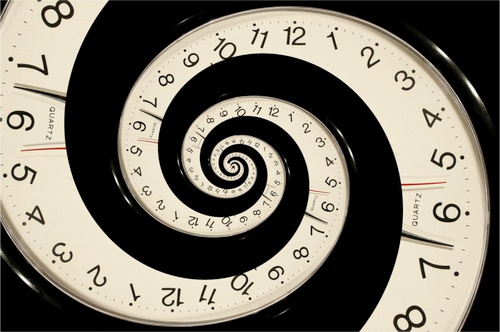
9. You Do Not Need to Defeat Time—Only Trick the Brain
We cannot stop aging, and we do not need to.
By introducing novelty, practicing attention, nurturing emotional bonds, and reflecting on experience, we can create more neural snapshots—more moments that count.
When your year contains
“the first time trying a new cuisine,”
“the first time noticing birds outside your window,”
“the first deep conversation with a stranger,”
you may find, to your surprise, that the year felt long.
Time did not slow down.
Your life became denser.
And sometimes, that is enough.
References
- Block, Richard A., Dan Zakay, and Arlin R. Hancock. “Human Aging and Duration Judgments: A Meta-Analytic Review.” Psychology and Aging, vol. 14, no. 4, 1999, pp. 1–15.
- Craig, A. D. “How Do You Feel—Now? The Anterior Insula and Human Awareness.” Nature Reviews Neuroscience, vol. 10, no. 1, 2009, pp. 59–70.
- Wittmann, Marc. Felt Time: The Psychology of How We Perceive Time. MIT Press, 2016.