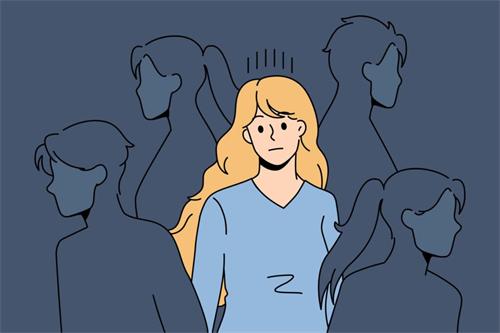

For much of modern history, the family, the organization, and long-term interpersonal relationships have been regarded as the fundamental building blocks of society. Yet today, we appear to be standing at the threshold of a profound structural shift. Increasingly, people are living, working, consuming, and constructing meaning as individuals rather than as members of traditional collective units. The “solo individual” — manifested in solo living, one-person businesses, and single-person consumption — is emerging as a visible and legitimate social unit in its own right.
This transformation does not mean that families or collective structures are disappearing. Rather, society is moving toward a more pluralistic and complex configuration of social units. The family is no longer the sole default framework for a meaningful life. Increasingly, a single individual can represent a complete, stable, and sustainable mode of existence.
From Marginal Choice to Social Mainstream
Changes in living arrangements provide some of the clearest evidence of this shift. Living alone, once viewed as a temporary or transitional condition, has become a mainstream and long-term choice. In China, the number of single-person households has surpassed 125 million. In Germany, approximately 20.6 percent of the population lives alone, meaning that at least one in five people maintains an independent household. In Nordic countries, the proportion is even higher.
Economic and consumption patterns further reinforce this trend. The rise of the “solo economy” has given birth to entirely new markets. Search volumes for solo travel continue to grow worldwide, and in the United States, more than one quarter of adults regularly eat meals alone. Consumption preferences are increasingly oriented toward premium quality, personalization, and self-directed pleasure rather than shared utility.
Work itself has undergone a parallel transformation. Independent labor models such as “one-person companies” and “solo entrepreneurs” are expanding rapidly. In the United States, more than one-third of new businesses are founded by a single individual. Globally, advancements in artificial intelligence, automation, and digital platforms now allow individuals to perform tasks that once required entire teams. The idea that “one person can function as a full organization” has moved from metaphor to reality.
Why Are People Actively Choosing Solitude?
At first glance, this may appear to be an era of unprecedented loneliness. Psychologically, however, it may be more accurate to interpret it as a response to excessive and inefficient social interaction.
In highly networked modern societies, people are rarely truly offline. Messages, updates, social expectations, and emotional signals arrive in an uninterrupted stream, all vying for limited mental resources. Findings from cognitive psychology indicate that when social contact is constant, shallow, or imposed rather than chosen, it places a heavy burden on attention and contributes to mental exhaustion and emotional depletion.
In this context of “social inflation,” attention, time, and mental energy become scarce resources. When individuals finally regain control over their discretionary time, solitude often emerges as a rational and restorative choice. From this perspective, eating alone, traveling alone, or engaging in solitary leisure activities does not necessarily indicate social failure or emotional deprivation. Instead, it may reflect a deliberate effort to reclaim autonomy and psychological equilibrium.
How Self-Reliance Shaped the Moral Value of Solitude
This positive framing of solitude is not merely a modern invention; it is deeply rooted in cultural and philosophical traditions.
From Ralph Waldo Emerson’s seminal essay Self-Reliance to Henry David Thoreau’s experiment at Walden Pond, solitude has long been portrayed as essential for truth-seeking, moral courage, and spiritual wholeness. Emerson argued that social conformity dulls the individual’s inner voice, and that only through solitude can one preserve originality and integrity. In this tradition, solitude is not emptiness but a sacred space for inner alignment.
Within individualist cultures, the ideal self is autonomous, self-directed, and self-defined. Solitude becomes a symbolic rite of self-formation — a space where individuals temporarily step outside social expectations and roles to confront and construct their identity. The capacity to be alone is therefore often interpreted as a marker of psychological maturity and inner strength.
At the same time, self-reliance emphasizes living without dependency. Both physically and emotionally, solitude represents freedom: my time, space, and thoughts belong entirely to me. This sense of control is a highly valued psychological asset in modern life.
The Double-Edged Consequences of a “Solo Society”
The rise of the solo individual undeniably brings significant benefits. It expands personal freedom, increases lifestyle flexibility, and creates new avenues for self-realization. Economically and culturally, it fosters innovation and promotes greater tolerance for diverse life choices.
Yet the risks are equally real.
For individuals, solo living often means bearing uncertainty alone. In moments of illness, emotional crisis, or unexpected hardship, the absence of immediate support networks increases vulnerability. For society as a whole, the weakening of traditional family and community structures may erode long-term social cohesion and resilience.
More subtly, when self-reliance becomes equated with complete emotional self-sufficiency, seeking support may be perceived as weakness. People may feel ashamed to admit vulnerability, attempting to process all distress internally. This not only intensifies psychological burden but also undermines the capacity to form deep, trusting relationships.
Digital environments further complicate this dynamic. Instant gratification through virtual interactions can temporarily mask loneliness while gradually weakening the ability to tolerate real-world isolation or cultivate meaningful bonds. What begins as voluntary solitude may, over time, drift into habitual social withdrawal, shaped as much by technological design as by personal choice.
Solitude vs. Loneliness: A Critical Psychological Distinction
Understanding this social transformation requires a clear distinction between solitude and loneliness — two states that are often mistakenly conflated.
Solitude is a voluntarily chosen physical or psychological state. In solitude, individuals typically feel calm, replenished, and in control. It is emotionally neutral or positive, serving as a source of restoration, reflection, and creativity.
Loneliness, by contrast, is a painful subjective experience. Its core lies in the perceived gap between desired and actual social connection. Loneliness is marked by feelings of loss, isolation, and unmet emotional longing.
In simple terms: solitude is “I choose to be alone”; loneliness is “I want connection but cannot obtain it.”
A substantial body of research links chronic loneliness to depression, anxiety, cognitive decline, cardiovascular disease, and weakened immune function. It is a serious public health risk. High-quality solitude, however, plays a crucial role in emotional regulation, creative thinking, and identity development.
Modern societies often glorify constant social engagement while stigmatizing solitude as antisocial or unsuccessful. This misunderstanding can lead people to fear necessary alone time or misinterpret normal loneliness as personal failure. Distinguishing between the two enables healthier psychological balance.

True Psychological Maturity: Flexibility Between Autonomy and Dependence
A healthy psychological state does not reside at either extreme — neither absolute independence nor total dependence. Instead, it reflects what psychologists often describe as autonomous interdependence: the ability to move fluidly between self-sufficiency and reliance on others.
True strength lies not only in enjoying solitude and taking responsibility for oneself, but also in accurately recognizing one’s needs and having the courage to seek support when necessary. In secure relationships, selectively expressing vulnerability — saying “I need you” — forms the foundation of trust and intimacy rather than undermining independence.
In a society increasingly composed of solo individuals, new forms of social infrastructure become essential. Mutual-aid networks, cooperative living arrangements, and emotional support groups represent vital “middle spaces” between isolation and traditional family units. These structures acknowledge dependence as a fundamental human condition rather than a personal defect.
Perhaps the ultimate marker of a mature society is not the ability of every individual to stand alone indefinitely, but the collective wisdom to know when to walk alone — and when to walk together.
References
- Bauman, Zygmunt. Liquid Love: On the Frailty of Human Bonds. Polity Press, 2003.
- Cacioppo, John T., and William Patrick. Loneliness: Human Nature and the Need for Social Connection. W. W. Norton & Company, 2008.
- DePaulo, Bella M. Singled Out: How Singles Are Stereotyped, Stigmatized, and Ignored, and Still Live Happily Ever After. St. Martin’s Press, 2006.