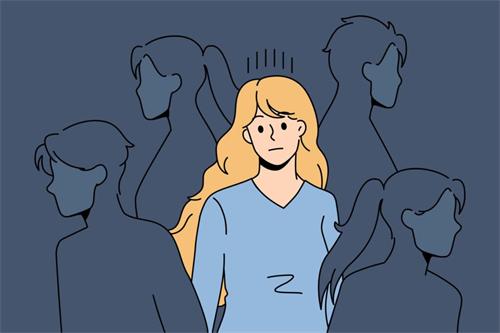
For decades, popular culture has promoted a simple narrative about success: If you want something badly enough, just try harder. When people fail to stick to habits, abandon goals, or relapse into old behaviors, the explanation is often moralized—you lacked discipline, you didn’t want it enough, your willpower wasn’t strong.
Psychological science tells a very different story.
Willpower is not a limitless inner force, nor is motivation a stable personality trait that some people “have” and others don’t. In fact, relying on willpower alone is one of the most unreliable strategies for long-term change. Understanding why willpower fails—and what actually sustains motivation—requires a deeper look at how the brain evolved, how habits form, and how modern environments systematically undermine self-control.
1. The Myth of Willpower as a Moral Strength
The idea of willpower has deep cultural roots. In many societies, self-control is framed as a virtue, while failure is seen as a personal flaw. This belief persists despite mounting evidence that self-regulation is context-dependent, biologically constrained, and heavily influenced by environment.
Psychologist Roy Baumeister’s early research popularized the concept of ego depletion—the idea that self-control draws from a finite mental resource that becomes exhausted with use. While later studies refined or questioned the exact mechanism, one core insight remains robust:
> Self-control is costly, fragile, and highly sensitive to stress, fatigue, and cognitive load.
In other words, people don’t fail because they are weak. They fail because willpower was never designed to shoulder the entire burden of behavior change.
2. Why Willpower Fails: A Neuropsychological Perspective
a. The Brain Was Not Designed for Constant Self-Control
From an evolutionary standpoint, the human brain evolved to prioritize energy efficiency and immediate survival, not long-term goal optimization.
Two systems are constantly interacting:
> The limbic system (emotional, fast, reward-oriented)
> The prefrontal cortex (planning, inhibition, long-term thinking)
Willpower depends largely on the prefrontal cortex, which is:
> Metabolically expensive
> Slower than emotional responses
> Easily impaired by stress, sleep deprivation, hunger, and emotional overload
When people are tired, anxious, or overwhelmed, the brain naturally shifts control back to faster, habitual circuits. This is not a failure of character—it is a predictable neural response.
b. Stress and Uncertainty Kill Motivation
Chronic stress fundamentally alters motivation.
Under stress, cortisol levels rise, impairing executive function and narrowing attention toward short-term relief rather than long-term rewards. This is why people often abandon healthy habits during difficult periods, even when they intellectually know what they “should” do.
In uncertain environments, the brain prioritizes immediate emotional regulation over abstract future benefits. This makes willpower-based strategies especially ineffective during precisely the moments people need them most.
c. Motivation Is State-Dependent, Not Stable
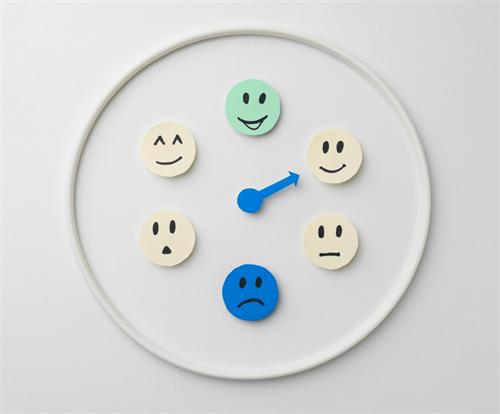
A common misconception is that motivation is a fixed internal drive. In reality, motivation fluctuates dramatically based on:
> Physical state (sleep, nutrition)
> Emotional state (stress, mood)
> Social context
> Environmental cues
Expecting consistent self-discipline across fluctuating internal states is like expecting a phone battery to last forever regardless of usage. Motivation is not a constant—it is a state, and states must be managed, not judged.
3. The Real Enemy of Willpower: Modern Environments
Human self-control evolved in environments with:
> Scarce food
> Limited stimulation
> Clear cause-and-effect between effort and reward
Modern environments are the opposite:
> Hyper-palatable food
> Infinite digital distractions
> Immediate dopamine rewards with minimal effort
This creates a motivational mismatch.
Apps, algorithms, and consumer systems are explicitly designed to hijack reward pathways faster than conscious control can intervene. In this context, relying on willpower is like bringing a knife to a gunfight.
The problem is not that individuals lack discipline—it’s that environments are engineered to overpower it.

4. Why “Just Try Harder” Backfires
Ironically, the more people emphasize willpower, the more likely they are to fail long-term.
a. Willpower Increases Cognitive Load
Constant self-monitoring (“Am I being disciplined enough?”) consumes mental energy and increases stress. This paradoxically weakens the very control people are trying to exert.
b. Failure Becomes Personal
When goals are framed as a test of willpower, setbacks feel like evidence of personal inadequacy. This triggers shame, which further undermines motivation and increases avoidance.
c. Motivation Becomes Conditional
People begin to believe they must feel motivated to act. When motivation dips—as it inevitably does—behavior stops.
Sustainable motivation does not come from effort alone. It comes from structure.
5. The Science of What Actually Works
If willpower is unreliable, what replaces it?
Research across behavioral psychology, neuroscience, and habit science points to a different model: motivation follows action, environment, and identity—not the other way around.
a. Design Environments That Reduce Friction
One of the strongest predictors of behavior is ease.
People consistently choose options that require the least effort in the moment. Instead of trying to overpower this tendency, effective systems leverage it.
Examples:
> Healthy food visible and accessible; junk food harder to reach
> Phone out of the bedroom to protect sleep
> Automatic savings instead of manual transfers
Reducing friction for desired behaviors and increasing friction for undesired ones is far more effective than self-control alone.
b. Shift from Outcome Goals to Process Systems
Willpower often fails because goals are framed as distant outcomes:
> Lose 20 pounds
> Write a book
> Learn a new language
The brain struggles to stay motivated by abstract future rewards.
Process-based systems focus instead on repeatable actions:
> Walk after dinner
> Write 300 words a day
> Study for 15 minutes
These systems reduce decision fatigue and create consistency even when motivation is low.
c. Use Identity-Based Motivation
Research by psychologist James Clear and others shows that behaviors stick when they align with identity.
Instead of:
> “I want to exercise”
Try:
> “I am someone who moves daily”
Identity-based motivation shifts behavior from effortful choice to self-expression. Actions become a way to be rather than something to force.
d. Make Motivation Social and External
Humans are deeply social learners. Motivation strengthens when behavior is:
> Visible
> Shared
> Reinforced by social norms
Accountability partners, public commitments, and group-based goals significantly outperform solitary willpower.
This is not weakness—it is biology.
6. Rethinking Self-Compassion and Discipline
One of the most counterintuitive findings in motivation science is this:
> Self-compassion improves self-discipline more than self-criticism.
People who respond to failure with curiosity rather than judgment are more likely to re-engage with goals. Shame triggers avoidance; compassion restores agency.
Discipline is not about punishment—it is about creating conditions where the right behavior is the easiest behavior.

7. A New Definition of Motivation
Motivation is not a spark you summon.
It is not a personality trait.
It is not a moral virtue.
Motivation is an emergent property of:
> Brain state
> Environment
> Identity
> Systems
When these align, action feels natural.
When they don’t, willpower collapses.
The most motivated people are not those who try harder—they are those who need to try less.
Conclusion: Stop Relying on Willpower, Start Engineering Behavior
The science of motivation offers a liberating insight: failure is not proof of weakness. It is feedback about systems that were never designed to succeed.
If you’ve struggled to maintain habits, pursue goals, or stay consistent, the solution is not more self-control. It is better structure.
Design environments that support you.
Build systems that survive low motivation.
Anchor actions to identity, not emotion.
And treat willpower as a backup—not the foundation.
When motivation stops being a battle and becomes a byproduct of design, change stops feeling heroic—and starts feeling human.
References
- Baumeister, R. F., Bratslavsky, E., Muraven, M., & Tice, D. M. (1998). Ego depletion: Is the active self a limited resource? Journal of Personality and Social Psychology, 74 (5), 1252–1265.
- Duckworth, A. L., Peterson, C., Matthews, M. D., & Kelly, D. R. (2007). Grit: Perseverance and passion for long-term goals. Journal of Personality and Social Psychology, 92 (6), 1087–1101.
- Neff, K. D. (2003). Self-compassion: An alternative conceptualization of a healthy attitude toward oneself. Self and Identity, 2 (2), 85–101.