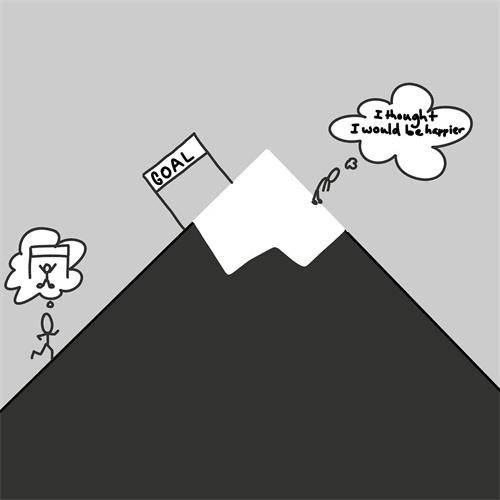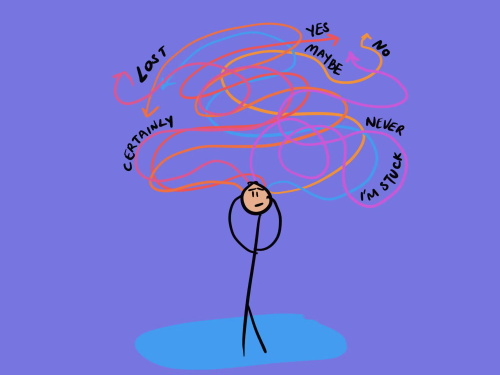

Have you ever noticed this peculiar pattern in your own mind?
Tasks that are already finished tend to fade quickly from memory. Yet small, unfinished, or interrupted matters—sometimes trivial ones—keep resurfacing in your thoughts, replaying themselves again and again, even when you would rather forget them.
This experience is not a personal flaw, nor a sign of weak self-control. It is the result of a well-documented psychological mechanism known as the Zeigarnik Effect. This effect describes a simple but powerful phenomenon: unfinished or interrupted tasks are remembered more vividly than completed ones.
The Zeigarnik Effect helps explain why we struggle with distraction, anxiety, and procrastination—but it also reveals something more hopeful. When understood and used skillfully, the discomfort of “unfinishedness” can become a source of motivation, focus, creativity, and long-term growth rather than a mental burden.
A Discovery Born in a Café
The discovery of the Zeigarnik Effect itself has an almost cinematic quality.
In the early 1920s, a young Lithuanian psychologist named Bluma Zeigarnik was sitting in a café in Berlin with her academic mentor. She noticed something curious: the waiters could effortlessly remember a long list of unpaid orders, yet once a customer paid the bill, the details of that order seemed to vanish almost instantly from their memory.
This everyday observation sparked her curiosity. Why were unfinished orders remembered so clearly, while completed ones were so easily forgotten?
Zeigarnik later tested this intuition through controlled experiments. She asked participants to complete a series of simple tasks, deliberately interrupting some of them while allowing others to be finished. The results were striking: people remembered interrupted tasks nearly twice as well as completed ones.
At the time, this finding challenged dominant psychological theories, which assumed that completion strengthened memory through reinforcement. Zeigarnik’s research suggested the opposite: what truly anchors information in memory is not completion, but incompletion.
Her work revealed a deeper truth about human motivation. What often drives us forward is not the satisfaction of finishing, but the psychological tension of what remains unresolved.
Why Unfinished Tasks Refuse to Let Go
From a cognitive perspective, starting a task creates a kind of mental “open file.” The brain allocates attention, energy, and working memory to the task. When the task is completed, the file is closed, and those cognitive resources are released.
But when a task is interrupted, the file remains open.
This open state generates what psychologists call cognitive tension—a low-level but persistent mental pressure that keeps reminding us something is incomplete. Like a background program running on a computer, it quietly consumes attention even when we are focused on something else.
Humans have a deep psychological need for closure. We want things to feel finished, coherent, and resolved. An unfinished task violates that expectation, creating a subtle sense of discomfort that pulls our attention back to it.
From an evolutionary perspective, this mechanism made sense. Remembering unresolved threats or unfinished goals—such as unchecked dangers or unfound food sources—enhanced survival. In modern life, however, this same mechanism manifests as constant mental reminders of unanswered emails, pending decisions, and half-finished projects.
The effect becomes even stronger when emotions are involved. Tasks associated with anxiety, regret, anticipation, or guilt form a powerful “event + emotion” memory loop. This is why unfinished exams, unresolved conflicts, or unspoken words can resurface in our minds years later with surprising clarity.

The Zeigarnik Effect in the Broader Psychological Landscape
The Zeigarnik Effect does not exist in isolation. When viewed within the broader framework of psychology, it resonates with several foundational theories.
It aligns closely with flow theory, proposed by Mihaly Csikszentmihalyi. Flow—a state of deep immersion and timeless focus—emerges most easily when a person is engaged in a clear, challenging, and unfinished goal. The mild tension created by incompletion provides the mental energy that fuels sustained attention.
The effect also fits seamlessly into Gestalt psychology, which emphasizes the human tendency to perceive incomplete patterns as whole. Just as we instinctively “complete” a broken circle in our perception, we feel compelled to complete unfinished tasks in our mental world. Our fixation on unfinished business is simply the mind striving for psychological wholeness.
The Aesthetics of the Unfinished: Art, Media, and Design
Our sensitivity to incompletion extends far beyond the laboratory. It has shaped art, storytelling, and modern product design for centuries.
The Venus de Milo, missing her arms, is not diminished by her incompleteness—if anything, it enhances her beauty. The absence invites imagination, encouraging viewers to mentally reconstruct what is missing. This is the Zeigarnik Effect expressed in aesthetic form: incompletion creates participation.
In literature and film, cliffhangers operate on the same principle. A story that pauses at a moment of tension is far more compelling than one that resolves too neatly. Our brains resist narrative gaps and push us to keep reading, watching, and waiting.
Modern technology has mastered this mechanism. Progress bars, achievement rings, unread notifications, and “seen but not replied” indicators are all engineered forms of controlled incompletion. Streaming platforms eliminate the natural stopping point by auto-playing the next episode, creating a seamless, never-quite-finished viewing experience that keeps us engaged deep into the night.
Managing the Zeigarnik Effect to Reduce Anxiety and Mental Overload
While the Zeigarnik Effect can be useful, unmanaged incompletion can also lead to stress and cognitive fatigue.
Externalize unfinished tasks.
Write everything down—big or small. Transferring tasks from your mind to a physical or digital list reduces the brain’s need to keep reminding you. The list becomes an “external memory system,” allowing your mind to rest.
Break large tasks into concrete next steps.
Vague goals create maximum tension. “Write a report” is overwhelming; “open the document and write three headings” is actionable. Small, achievable steps give the brain evidence of progress and reduce psychological pressure.
Create intentional stopping rituals.
At the end of the day, take five minutes to note exactly where you will resume tomorrow. This signals to your brain that the task is acknowledged and scheduled, preventing work-related thoughts from intruding into personal time.
Using the Zeigarnik Effect as a Tool for Motivation and Creativity
When used deliberately, incompletion can become a powerful ally.
Writers, artists, and learners can intentionally stop at a point where the next step is clear. This creates a sense of anticipation that pulls them back into the work later. Ernest Hemingway famously advised stopping when the writing is going well, not when you are stuck—so that tomorrow’s work begins with momentum, not dread.
Habit formation can also benefit from this effect. Items left unchecked on a daily task list create a gentle psychological pull toward completion. The desire for closure nudges behavior without force or guilt.
In communication and relationships, leaving a question open or a story unfinished can deepen engagement. A conversation that ends with “we’ll talk about that next time” often lingers longer in memory than one that exhausts every topic.
At a broader level, life itself can be viewed as an open-ended project. Each achievement does not represent a final destination, but a bridge to the next unfinished challenge. This perspective keeps growth dynamic and prevents stagnation.

When Not to Close the Loop
The Zeigarnik Effect teaches us something subtle but profound: unfinishedness itself is not the problem. What drains us is unresolved tension without structure or meaning.
Not every unfinished question in life requires closure. Some of the most fundamental human concerns—purpose, identity, mortality—are inherently open-ended. Learning to coexist peacefully with these unresolved dimensions is a sign of psychological maturity.
It is similar to appreciating a piece of modern music that never resolves into a final chord. Its beauty lies not in completion, but in movement, tension, and becoming.
Unfinished tasks can trap us—but they can also propel us forward. When we learn to manage, frame, and selectively embrace incompletion, the Zeigarnik Effect transforms from a mental burden into a quiet engine of progress.
References
- Zeigarnik, Bluma. “Über das Behalten von erledigten und unerledigten Handlungen.” Psychologische Forschung, vol. 9, 1927, pp. 1–85.
- Masicampo, E. J., and Roy F. Baumeister. “Consider It Done! Plan Making Can Eliminate the Cognitive Effects of Unfulfilled Goals.” Journal of Personality and Social Psychology, vol. 101, no. 4, 2011, pp. 667–683.
- McGraw, A. Peter, et al. “The Lure of the Unknown: The Need for Closure and Curiosity.” Journal of Personality and Social Psychology, vol. 102, no. 3, 2012, pp. 511–524.
- Gestalt Psychology. Köhler, Wolfgang. Gestalt Psychology. Liveright Publishing, 1947.