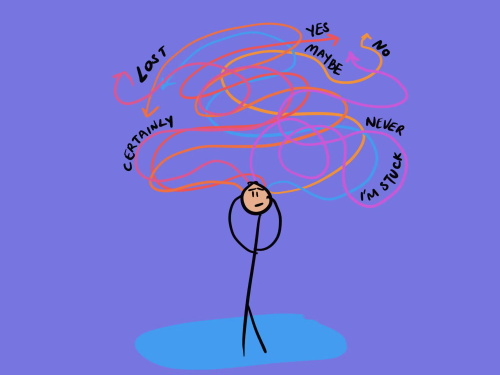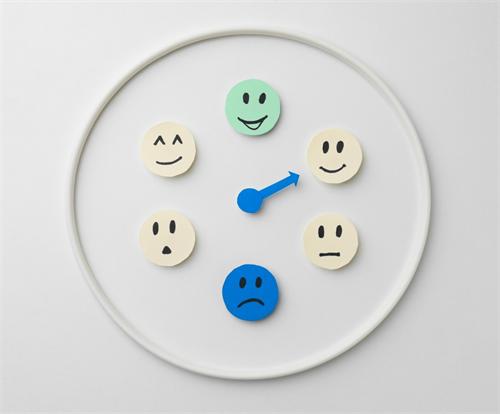
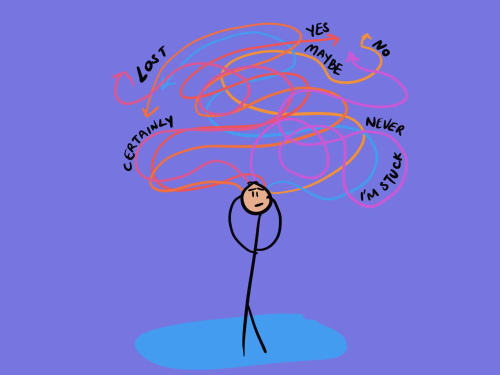
In modern society, choices are everywhere. From shopping, dating, and career paths to entertainment options, we are constantly surrounded by a multitude of possibilities. Intuition tells us that more choices equal more freedom and greater happiness. However, psychological research suggests that this common belief is often misleading. The American psychologist Barry Schwartz, in his seminal work, introduced the concept of the “paradox of choice,” which captures a counterintuitive truth: when the number of options shifts from “sufficient” to “overwhelming,” the quality of our decisions, our satisfaction, and even our overall psychological well-being can significantly decline.
The paradox of choice does not imply that having choices is inherently harmful. Rather, it highlights the negative psychological consequences that emerge when options become excessive, turning freedom into a burden. In modern consumer societies and the information age, individuals are exposed to unprecedented possibilities, but these possibilities often bring anxiety, dissatisfaction, and even a sense of helplessness. Understanding the paradox of choice can help us navigate complex decisions and enhance our well-being in daily life.
1. Cognitive Limitations: Decision Fatigue
Our cognitive resources, such as attention and working memory, are inherently limited. Facing a vast array of options requires significant mental effort to collect information, compare attributes, and evaluate pros and cons. This process rapidly depletes our “mental bandwidth,” leading to what psychologists call “decision fatigue.” Just as muscles tire after prolonged physical activity, our decision-making ability deteriorates after continuous choices.
For instance, after browsing a shopping mall for four hours, we often feel incapable of making further decisions and may even develop an aversion to purchasing anything. Psychological research explains this phenomenon: when the number of choices exceeds our cognitive capacity, mental resources are exhausted, resulting in lower decision quality and reduced satisfaction.
2. Opportunity Costs and the Pursuit of the “Absolute Best”
Every choice inherently involves a trade-off, as selecting one option means forgoing the potential benefits of others—this is known as opportunity cost. The more options available, the greater the potential benefits that are sacrificed. For example, when choosing a smartphone among ten candidates, the advantages of the nine unselected models—better camera quality, longer battery life, or other features—become a vivid “loss list.” This amplification of opportunity costs can shift our mindset from seeking “good enough” to chasing the impossible ideal of the “absolute best,” fearing that we might miss out on a superior option.
Psychological studies also show that the more choices we face, the higher our expectations for the chosen option. Subconsciously, we believe that among so many options, there must be a perfect match. When reality inevitably falls short, the gap between expectation and outcome can lead to significant disappointment. In other words, more options do not necessarily increase happiness—they often heighten dissatisfaction and anxiety.
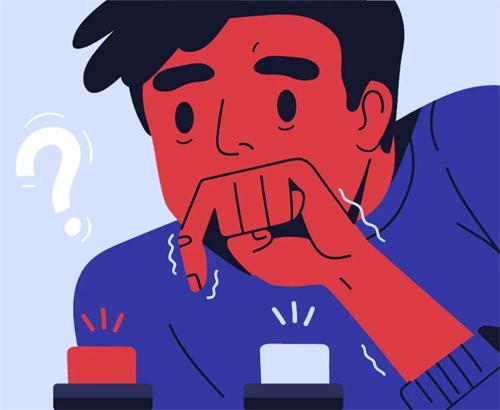
3. Increased Responsibility and Self-Blame
When choices are limited, we are more likely to attribute negative outcomes to external circumstances, such as “there were only a few options available.” But when the range of options is vast, poor outcomes are often attributed to personal error: “I made the wrong choice.” This tendency to internalize responsibility fosters regret, counterfactual thinking (“If only I had chosen that one…”) and reduced self-efficacy. The more choices we have, the more likely we are to blame ourselves and dwell on missed opportunities, increasing psychological stress.
4. Everyday Examples of the Paradox of Choice
a. Dating Apps: Anxiety in the “Waterfall of Options”
Modern dating apps provide seemingly limitless potential partners, but this abundance can undermine meaningful connections. Faced with endless profiles, our brains rely on shallow processing, simplifying judgment to quick “swipe left or right” decisions. Every match also represents the rejection of hundreds or thousands of other potential partners, creating a mental pressure of “there must be someone better.”
This illusion of infinite possibilities increases disappointment: any imperfection in a partner often triggers withdrawal rather than efforts to resolve issues. As a result, dating experiences shift from exploration and growth to anxiety and constant evaluation.
b. Career Choices: Lost Direction in Infinite Possibilities
The modern workforce emphasizes that “you can become anyone you want,” but unlimited career possibilities can create anxiety rather than freedom. Faced with countless industries, companies, and roles—full-time jobs, freelancing, entrepreneurship—young people may get stuck in a perpetual state of information gathering and skill development, afraid to commit to one path.
Choosing a job inherently involves giving up all other potential career paths, along with the income, social status, and personal fulfillment they might bring. Early in one’s career, these unchosen paths seem especially enticing. Observing peers’ seemingly perfect career trajectories on social media exacerbates self-doubt, preventing individuals from fully engaging with their current role.
c. Streaming Entertainment: Choice Fatigue and the Loss of Enjoyment
Streaming platforms offer an overwhelming amount of content, which should theoretically maximize entertainment satisfaction. In practice, however, it often leads to “choice fatigue.” Scrolling through thumbnails, watching trailers, and reading synopses consume significant mental energy, reducing enjoyment of the content itself.
Once a movie or series is selected, viewers often remain preoccupied with other options. If the first ten minutes fail to immediately captivate, anxiety about “choosing wrongly” may arise, disrupting immersion. Ultimately, entertainment experiences suffer, leaving one exhausted and unsatisfied despite having invested substantial time.
5. Factors Influencing Susceptibility to the Paradox
1. Personal Traits: Maximizers—those who strive for the best—are more prone to regret and dissatisfaction than satisficers, who seek “good enough.” Perfectionists and highly sensitive individuals are particularly vulnerable.
2. Decision Importance and Complexity: Life-altering decisions, such as choosing a partner or a house, are more affected by the paradox. Low comparability between options (e.g., completely different career paths) can exacerbate decision paralysis.
3. Information Presentation and Defaults: Disorganized or overwhelming information increases cognitive load. Clear categorization, meaningful grouping, and well-chosen default options can mitigate the paradox.
4. Cultural and Temporal Context: Individualistic societies, which emphasize personal choice, expose individuals more directly to the pressures of choice. The digital age amplifies this phenomenon, providing seemingly infinite possibilities.

6. Strategies to Overcome the Paradox of Choice
The essence of the paradox is that we transform “the experience itself” into “decision optimization.” Relationships, work, and entertainment are overshadowed by comparison, anxiety, and the pursuit of perfection. Overcoming this requires a mindset shift: from “consumer” to “creator” and “participant.”
> Dating: Focus on creating unique interactions and shared experiences rather than seeking the perfect partner.
> Career: Build value and shape your role within your chosen path rather than seeking a pre-idealized job.
> Entertainment: Engage emotionally with narratives instead of critically evaluating every option.
Other practical strategies include:
1. Set boundaries: Once an option meets core needs, stop searching further.
2. Focus on positives: Reduce attention to unchosen options and enhance satisfaction with the selected choice through self-persuasion.
3. Commit to your decision: Accept that your choice is reasonable and direct energy toward enjoying the outcome rather than second-guessing it.
True freedom does not come from having every option available; it comes from defining boundaries, recognizing what is “good enough,” and embracing it fully. This represents a shift from “I must find the best” to “I choose and cherish what is good enough.” In an ocean of information, building a ship with a clear direction is more effective than attempting to control the entire sea, leading to greater satisfaction.
7. Conclusion
The paradox of choice reveals the psychological dilemmas modern humans face when confronted with limitless possibilities. Excessive freedom can reduce happiness rather than enhance it. Whether in shopping, dating, career, or entertainment, we risk falling into the trap of endless comparison and anxiety. Understanding the mechanisms of the paradox, setting reasonable limits, focusing on the present, and valuing what we choose are essential strategies for maintaining mental balance and achieving personal growth.
In the modern world, choice is not merely a right—it is an art of management. Learning to use freedom wisely, rather than being enslaved by it, is the key to navigating infinite options successfully. The paradox of choice reminds us that happiness does not stem from unlimited possibilities but from thoughtful selection, mindful engagement, and genuine satisfaction with what we have chosen.
References
- Baumeister, Roy F., et al. “Ego Depletion: Is the Active Self a Limited Resource?” Journal of Personality and Social Psychology, vol. 74, no. 5, 1998, pp. 1252–1265.
- Iyengar, Sheena S., and Mark R. Lepper. “When Choice Is Demotivating: Can One Desire Too Much of a Good Thing?” Journal of Personality and Social Psychology, vol. 79, no. 6, 2000, pp. 995–1006.
- Schwartz, Barry. The Paradox of Choice: Why More Is Less. Harper Perennial, 2004.