
Most people have experienced this at some point in their lives.
You continue investing in a project whose prospects are clearly deteriorating.
You remain in a relationship that drains you emotionally, even though you know it no longer serves you.
You promise yourself—again and again—to quit a harmful habit, only to fall back into it shortly after.
On the surface, we justify our choices with familiar phrases:
“I’ve already put so much into this.”
“Maybe things will improve.”
“It would be a waste to stop now.”
But more often than not, what truly keeps us stuck has little to do with the present situation itself. What we struggle to let go of is the past—time, energy, money, and emotional investment that can never be recovered.
In economics, these irretrievable investments are known as sunk costs. And when people allow sunk costs to influence decisions about the present and future, they fall into what is called the sunk cost fallacy.
The problem is not a lack of intelligence or discipline.
The problem is that the human brain is not designed to give up gracefully.
1. Why Letting Go Literally Hurts: Loss Aversion and the Brain
From a neuroscientific perspective, letting go is not merely a rational calculation—it is a physiological experience.
Neuroimaging studies show that when people evaluate losses, the brain regions activated—particularly the anterior cingulate cortex—overlap significantly with those involved in processing physical pain. In other words, abandoning something you have invested in does not just feel painful metaphorically. The brain processes it as real pain.
Behavioral economics adds another crucial insight: loss aversion. Research consistently demonstrates that losses feel approximately two to two-and-a-half times more painful than equivalent gains feel pleasurable.
What does this mean in real life?
Abandoning a project you have invested $100,000 in feels far more painful than the pleasure of gaining a new $100,000 opportunity. The brain instinctively seeks to avoid this immediate, certain pain—even if continuing leads to far greater losses in the long run.
As a result, we delay decisions, rationalize our choices, and cling to false hope—not because staying is logical, but because leaving hurts too much.
2. The Psychological Cost of Admitting Failure
Letting go also carries a heavy psychological burden: admitting that a past decision may have been wrong.
This creates what psychologists call cognitive dissonance—the discomfort that arises when our self-image conflicts with reality. We like to believe we are rational, competent decision-makers. When a choice turns out poorly, that belief is threatened.
To reduce this discomfort, the mind often engages in self-protective strategies:
> Doubling down on the original decision
> Searching selectively for information that supports it
> Convincing ourselves that success is just around the corner
This tendency is known as escalation of commitment. When faced with negative outcomes, people often respond not by cutting their losses, but by investing even more—time, money, or emotional energy—to justify their original choice.
Ironically, the desire to protect our self-esteem can transform a manageable mistake into a long-term trap.
3. The Slot Machine Effect: Why Intermittent Rewards Keep Us Hooked
In toxic relationships and harmful habits, sunk costs are reinforced by another powerful mechanism: intermittent reinforcement.
A moment of warmth after conflict.
A brief sense of pleasure after a harmful indulgence.
A small win in an otherwise failing project.
These rewards are unpredictable and inconsistent—but that is precisely what makes them addictive. Psychologically, they function like a slot machine: every attempt carries the illusion that this time might be different.
Decades of behavioral research have shown that variable rewards are far more effective at sustaining behavior than consistent ones. They create a “near-miss” effect that keeps people emotionally invested long after logic would suggest walking away.
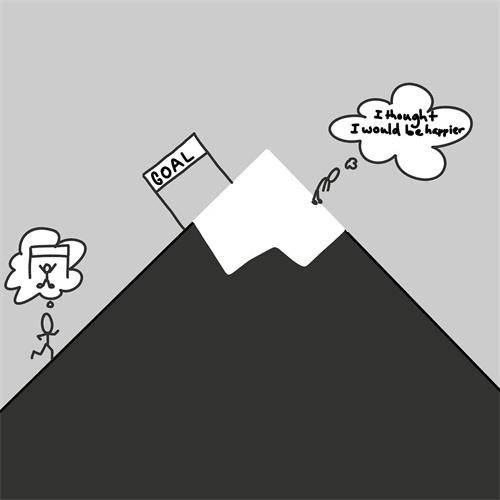
We are not staying because things are good.
We are staying because they are almost good.
4. Social Pressure and Identity: When Quitting Feels Like Losing Yourself
Beyond individual psychology, cultural values play a powerful role in reinforcing the sunk cost trap.
Many societies glorify perseverance and stigmatize quitting. “See it through” is praised; “giving up” is often equated with weakness or failure. To avoid social judgment, people persist in situations that no longer make sense.
Over time, long-term commitments also become deeply entwined with identity.
A project is no longer just a project—it becomes “who I am.”
A relationship becomes proof of loyalty or resilience.
A habit becomes part of a lifelong narrative.
Letting go, then, is not merely ending an activity. It threatens the self-concept itself. A part of one’s identity must dissolve, which can provoke profound existential anxiety.
Even when the present situation is painful, it is at least familiar. The unknown that follows letting go feels frightening, unpredictable, and cognitively demanding. Faced with uncertainty, the brain often prefers familiar suffering over unfamiliar freedom.
5. Why Letting Go Is Not Weakness—but Advanced Rationality
Many people persist not because something is worth continuing, but because of past investment, social expectations, and fear of self-reproach.
Yet persistence is not inherently virtuous.
When direction is fundamentally wrong, perseverance does not lead to redemption—it accelerates depletion.
Cutting losses is not surrender. It is a sophisticated form of rationality.
It reflects the courage to confront reality rather than negotiate with illusions.
6. How to Break Free from the Sunk Cost Trap
1. Set Clear Stop-Loss Boundaries
In investing, stop-loss rules exist to limit damage. Life deserves the same discipline. Define in advance what level of emotional, physical, or ethical cost is unacceptable. When that line is crossed, give yourself permission to stop—not as failure, but as self-respect.
2. Audit Future Costs, Not Past Investments
Stop asking, “How much have I already put in?”
Start asking, “What will this continue to cost me if nothing changes?”
Time, opportunity, health, emotional energy—these future costs are the only ones that still matter.
3. Make Peace with Past Decisions
Tell yourself: “Given what I knew then, my decision was reasonable.”
Growth does not invalidate past choices; it reframes them. Separating self-worth from a single outcome reduces the need for self-justification.
4. Create a Ritual of Closure
The brain needs symbolic endings. Write a farewell letter you never send. Conduct a formal review. Publicly declare the end of a phase. Rituals provide psychological closure and help facilitate identity transition.
5. Replace the Void with Small Wins
After letting go, emptiness is the greatest risk. Immediately introduce small, constructive actions—a new routine, a postponed plan, a modest personal goal. These “small wins” restore agency and meaning, counterbalancing the loss.

Conclusion: Don’t Let Wreckage Become a Compass
The essence of the sunk cost trap lies in a tragic miscalculation: we mistake past sacrifices for guidance about the future.
But sunk costs are not beacons.
They are wreckage behind us.
The only compass worth following is grounded in present reality and future value.
Letting go is not a rejection of the past.
It is a refusal to let the past dictate the rest of your life.
And sometimes, the most courageous move forward
is the decision to stop rowing toward a shore that no longer exists.
References
- Fox, Craig R., and Amos Tversky. “Loss Aversion and Riskless Choice: A Reference-Dependent Model.” Quarterly Journal of Economics, vol. 110, no. 2, 1995, pp. 585–603.
- Ariely, Dan. Predictably Irrational: The Hidden Forces That Shape Our Decisions. Revised and Expanded ed., Harper Perennial, 2010.
- Navarro, Daniel J., et al. “The Sunk Cost Effect in Decision-Making: A Psychological Review.” Psychological Bulletin, vol. 144, no. 6, 2018, pp. 1–27.