In today’s highly atomized modern society, loneliness, anxiety, and emotional exhaustion have quietly become shared experiences for many people—especially younger generations. We live in an era of unprecedented connectivity, yet genuine emotional connection feels increasingly fragile. Social media keeps us constantly “in touch,” but rarely truly understood. Academic pressure, workplace competition, family responsibilities, and social expectations pile up, leaving many people emotionally overloaded and yet unsure where to safely release what they feel.
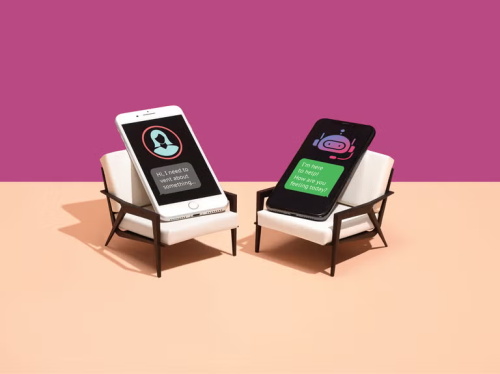
Against this backdrop, conversational AI has emerged as an unexpected emotional outlet. An increasing number of people report that talking to a chatbot—rather than to a close friend—feels easier, lighter, and more relieving. This phenomenon does not mean that AI understands us better than humans do. Instead, it reveals something deeper about modern emotional needs, social pressure, and the psychological cost of human interaction.
Expression Itself Is Therapeutic
Psychological research has long shown that expression has intrinsic healing power. In clinical psychology, one widely studied method is expressive writing therapy. Participants are asked to write in detail about emotionally painful or stressful experiences. Although this process may temporarily intensify negative emotions, numerous studies have found that people who engage in expressive writing experience better sleep quality, improved emotional regulation, and enhanced physical and mental health over time compared to those who do not.
The reason lies in how the brain processes expression. Writing or verbalizing emotions is not passive venting—it is an active cognitive task. It engages memory, language organization, motor functions, and attentional control. As these higher-order brain regions become involved, they gradually take control away from emotion-driven neural circuits. In simple terms, the brain begins to think rather than merely react, allowing emotional intensity to subside.
However, expression becomes even more powerful when it is not done in isolation.
Healing Requires Being Responded To
What truly deepens relief is not just speaking or writing, but being met with a response. Psychology refers to this experience as responsiveness—the feeling that one’s emotions are understood, acknowledged, and treated with care. Humans are wired not only to express but to be received.
Yet in real-life relationships, this kind of consistent emotional responsiveness is surprisingly difficult to obtain.
The Hidden “Social Tax” of Human Conversation
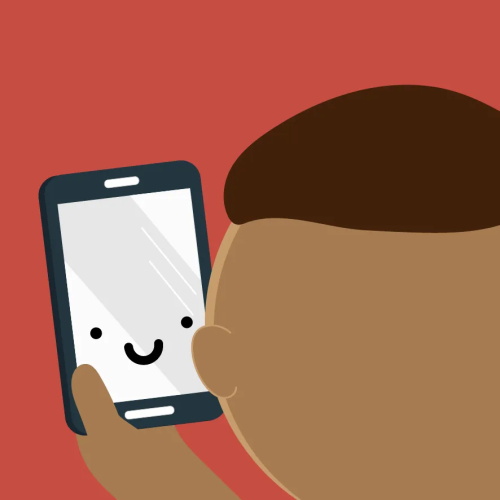
Talking to another person is never free of cost. Every conversation—especially an emotionally vulnerable one—requires us to pay an invisible “social tax.” We monitor our words, manage facial expressions, consider the other person’s feelings, and assess relational consequences. Even before we begin speaking, we are already calculating.
Research suggests that the average person makes tens of thousands of micro-decisions each day, many of them embedded in social interaction. For someone already emotionally depleted, the effort required to communicate can feel overwhelming.
Human conversation is also cognitively demanding because it operates across multiple channels. Spoken language conveys less than 30 percent of meaning; the rest is inferred through tone, facial expression, body language, and context. Processing all of this in real time places a heavy load on the brain—and creates fertile ground for misunderstanding.
Then there is the issue of expectation mismatch. We often hope others will understand us exactly as we feel, but real responses rarely align perfectly with our internal experience. When comfort misses the mark, disappointment can deepen rather than relieve emotional pain.
French sociologist Erving Goffman’s dramaturgical theory further explains this tension. He argued that social life resembles a performance: people manage impressions, maintain roles, and protect their public identity. Even among friends, we are rarely completely unguarded. Vulnerability, while valued, always carries risk.
AI as an “Absolute Safe Zone”
This is where chatbots enter the picture.
When confiding in friends, even supportive ones, people may worry about being judged, appearing weak, or becoming an emotional burden. Some fears are subtle but persistent: Is this too negative? Am I asking for too much? Will this change how they see me? Privacy concerns also linger—once shared, personal information exists within a social network beyond one’s control.
AI removes many of these risks entirely.
A chatbot creates a psychological vacuum chamber—a space with minimal social consequence. It does not judge, tire, gossip, or expect reciprocity. There is no emotional debt, no obligation to “return the favor” later. Users can speak freely without worrying about balance, reputation, or relational damage. Emotional expression becomes purely expressive, not transactional.
Another key factor is availability and consistency. AI does not become distracted, impatient, or emotionally overwhelmed. It offers uninterrupted attention at any hour. In a world defined by fragmented focus and constant interruption, this experience of being fully heard feels almost luxurious.
Importantly, AI responses are predictable. While they may lack genuine emotion, they reliably reflect empathy through language: “That sounds incredibly difficult,” “It’s understandable that you feel this way.” This consistency itself is calming. Unlike human responses, which vary with mood, context, and capacity, AI’s emotional tone remains stable and non-threatening.
A Mirror for the Self
Interacting with a chatbot is also, in many ways, a structured form of self-dialogue. The AI functions as a neutral intermediary, helping users organize thoughts and emotions without introducing personal bias. The conversation reflects the user’s internal world back to them, filtered through clarity rather than judgment.
For highly sensitive individuals, people with social anxiety, or those experiencing emotional burnout, deep interpersonal interaction can feel energetically costly. AI provides a zero-energy, zero-backlash environment—a place to practice articulation, reflection, and emotional processing without fear of emotional recoil.
The Limits of This Relief
Despite these benefits, it is crucial to recognize the limitations.
Research suggests that excessive reliance on social robots—particularly among adolescents—may be associated with delayed development of empathy and interpersonal skills. There is also the risk of emotional projection. Humans are prone to anthropomorphizing technology, attributing understanding and care where none truly exist.
Experts caution that relying on AI for emotional fulfillment is like drinking sugar water when you’re dehydrated: it offers temporary relief but lacks the nutrients required for long-term health.
Human relationships, for all their imperfections, offer something AI cannot. Friends bring lived experience, unexpected perspectives, and creative insight. They may challenge us, disagree with us, or sit silently beside us when words fail. Genuine comfort often includes physical presence—a look, a gesture, a shared moment—which no algorithm can replicate.
AI as an Emotional Transition Space
So why does talking to a chatbot feel relieving?
Not because AI is superior to human connection, but because it serves as a low-pressure emotional transition space. It allows people to unload emotional weight without navigating the complexities of social exchange. In that safe space, thoughts become clearer, emotions settle, and psychological load decreases.
Only then are many people able to re-enter real relationships with greater self-awareness and emotional stability.
This phenomenon reveals a modern paradox: sometimes we open up to “emotionless machines” precisely because we understand how heavy emotional connection with real people can be.
The healthiest approach may not be choosing between AI and human connection, but integrating both. Use AI as a tool for emotional organization and decompression—then carry that clarity into relationships that are messy, risky, and profoundly human.
Because while AI can help us feel calmer, only human connection can help us grow.
References
- Pennebaker, James W., and Joshua M. Smyth. Opening Up by Writing It Down: How Expressive Writing Improves Health and Eases Emotional Pain. 3rd ed., Guilford Press, 2016.
- Turkle, Sherry. Alone Together: Why We Expect More from Technology and Less from Each Other. Basic Books, 2011.
- Kross, Ethan, et al. “Self-Talk as a Regulatory Mechanism: How You Do It Matters.” Journal of Personality and Social Psychology, vol. 106, no. 2, 2014, pp. 304–324.
- Baumeister, Roy F., and Mark R. Leary. “The Need to Belong: Desire for Interpersonal Attachments as a Fundamental Human Motivation.” Psychological Bulletin, vol. 117, no. 3, 1995, pp. 497–529.