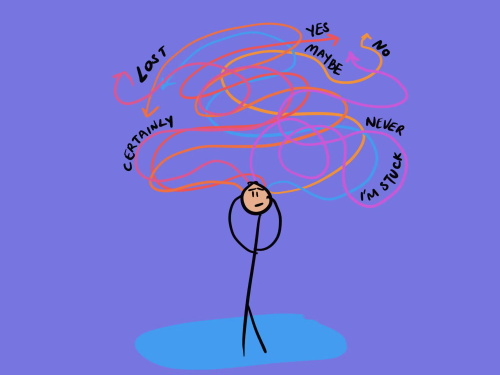

What if peak performance were not an accident—but a skill?
For decades, athletes, artists, surgeons, programmers, and musicians have described moments when effort dissolves, time distorts, and action feels effortless. Psychologist Mihaly Csikszentmihalyi famously named this experience flow—a state of optimal consciousness where performance and well-being converge.
Traditionally, flow has been treated as something elusive: it “happens” when conditions are right. But recent advances in neuroscience suggest a more provocative possibility: Can we deliberately induce flow using brain-based technologies such as transcranial alternating current stimulation (tACS) and neurofeedback?
1. What Is Flow, Really?
Flow is often described in poetic terms: being in the zone, effortless control, losing yourself in the task. But psychologically, flow has a precise structure.
According to Csikszentmihalyi, flow emerges when several conditions align:
1. Clear goals
2. Immediate feedback
3. A balance between challenge and skill
4. Deep concentration
5. Loss of self-consciousness
6. Distorted sense of time
7. Intrinsic reward
Flow is not relaxation. It is high engagement with low internal friction.
The Neural Signature of Flow
Neuroscience has complicated—but also clarified—this picture.
Flow is associated with:
> Reduced activity in the default mode network (DMN)
The DMN is involved in self-referential thinking, rumination, and mind-wandering. During flow, the “inner narrator” quiets down.
> Efficient communication between task-relevant networks
Especially between sensory, motor, and attentional systems.
> Altered prefrontal cortex activity
Some studies suggest transient hypofrontality—a temporary downregulation of executive self-monitoring, allowing automatic skills to run without interference.
> Specific brainwave patterns
Flow is often associated with increases in alpha, theta, and sometimes gamma oscillations, depending on the task.
In short, flow is not mystical—it is a distinct neurocognitive configuration.
2. Why Flow Is So Hard to Enter Voluntarily
If flow is so beneficial—linked to creativity, learning, motivation, and even happiness—why can’t we just decide to enter it?
Because flow depends on conditions, not intentions.
Several psychological barriers stand in the way:
> Overcontrol: Trying too hard activates self-monitoring systems that disrupt automatic performance.
> Anxiety: Excess challenge relative to skill triggers threat circuits.
> Boredom: Too little challenge disengages attention.
> Distraction overload: Modern environments fragment attention before flow can stabilize.
Flow requires a paradoxical balance: intense focus without self-conscious effort. This is exactly what makes it attractive—and difficult to engineer.
3. Enter Neurotechnology: Can the Brain Be Nudged into Flow?
This difficulty has fueled interest in neurotechnological shortcuts. Two approaches dominate current discussion:
1. Transcranial Alternating Current Stimulation (tACS)
2. Neurofeedback
Both aim to influence brain states directly—but in very different ways.

4. tACS: Tuning the Brain’s Rhythms
What Is tACS?
Transcranial alternating current stimulation delivers a weak electrical current to the scalp at specific frequencies. Unlike tDCS (direct current stimulation), tACS oscillates, aiming to entrain brain rhythms.
Think of it as a metronome for neural activity.
Why Brain Waves Matter for Flow
Neurons communicate rhythmically. These oscillations coordinate information processing across regions.
> Alpha waves (8–12 Hz): Linked to relaxed focus and inhibition of irrelevant information
> Theta waves (4–7 Hz): Associated with learning, memory, and deep concentration
> Gamma waves (30–100 Hz): Linked to high-level integration and peak performance moments
Flow appears to involve specific oscillatory patterns, particularly alpha–theta coupling and efficient gamma bursts.
tACS and Performance Enhancement
Some studies suggest that applying tACS at task-relevant frequencies can:
> Improve learning speed
> Enhance working memory
> Increase sustained attention
> Reduce perceived effort
A few experimental protocols have targeted motor performance, creativity, and problem-solving—all domains closely related to flow.
Can tACS Induce Flow?
Here’s the honest answer: not reliably—yet.
tACS may help create neural conditions that resemble flow, but flow itself is not just a brainwave pattern. It also depends on:
> Skill mastery
> Task structure
> Motivation
> Emotional state
tACS can be thought of as lowering the threshold, not flipping a switch.
5. Neurofeedback: Learning to Regulate Your Own Brain
What Is Neurofeedback?
Neurofeedback is a form of biofeedback using real-time brain data (usually EEG). Users receive feedback—visual, auditory, or tactile—based on their brain activity and learn to self-regulate it.
Unlike tACS, neurofeedback does not force the brain into a state. It trains awareness and control.
Flow and Self-Regulation
Flow requires the ability to:
> Sustain attention
> Suppress internal noise
> Adjust arousal precisely
These are exactly the capacities neurofeedback targets.
Over time, users may learn to:
> Increase alpha activity during focus
> Reduce excessive beta linked to anxiety
> Enter calm-alert states more quickly
Some athletes and performers report improved access to “the zone” after neurofeedback training.
The Learning Curve
Neurofeedback is not instant:
> It requires repeated sessions
> Effects vary widely between individuals
> Placebo effects are difficult to rule out
But unlike tACS, neurofeedback aligns closely with skill acquisition rather than external modulation.
6. Flow on Demand: Hype vs. Reality
The idea of on-demand flow is seductive. Imagine:
> Writers entering deep creativity at will
> Surgeons maintaining flawless focus
> Students learning faster with less effort
But current evidence suggests a more nuanced reality.
What Neurotechnology Can Likely Do
> Accelerate learning of attentional control
> Reduce cognitive noise
> Improve consistency of performance
> Support recovery from fatigue or stress
What It Cannot Replace
> Skill development
> Meaningful goals
> Motivation and curiosity
> Environmental design
Flow is an emergent state, not a mechanical one.
7. Psychological and Ethical Risks
Any attempt to “hack” consciousness raises important concerns.
Psychological Dependence
If peak states are externally induced, users may:
> Lose confidence in their natural abilities
> Feel “flat” without technological assistance
> Avoid developing foundational skills
Over-Optimization Culture
The pursuit of constant peak performance risks turning flow from a joyful experience into another productivity demand.
Ironically, pressure to enter flow can destroy the very conditions that allow it.
Ethical Questions
> Who has access to these tools?
> Are enhancements fair in competitive contexts?
> Should cognitive states be optimized like software?
These questions mirror broader debates in cognitive enhancement and neuroethics.
8. A More Sustainable Model: Assisted, Not Artificial Flow
The most promising perspective may be integration rather than replacement.
Neurotechnology as:
> A training wheel, not a crutch
> A learning accelerator, not a shortcut
> A support for self-awareness, not a substitute for meaning
Flow thrives when biology, psychology, and environment align.
Practical Flow “Hacks” Without Hardware
Even without tACS or neurofeedback, research consistently supports:
> Clear goals and immediate feedback
> Distraction-free environments
> Moderate challenge progression
> Deep work routines
> Intrinsic motivation
Technology can amplify these—but not replace them.

9. So, Can We Hack Flow?
The short answer: partially, cautiously, and contextually.
We are learning how to nudge the brain toward flow-compatible states, but we cannot yet manufacture flow independently of skill, purpose, and engagement.
Flow is not just a brain state—it is a relationship between the mind and what it is doing.
In that sense, the most powerful “hack” may not be electrical or algorithmic, but psychological:
Designing lives and tasks that invite flow—rather than trying to force it.
10. The Future of Peak Performance
As neuroscience advances, the boundary between training and enhancement will blur. tACS and neurofeedback may become as common as meditation apps or fitness trackers.
But the deeper question remains:
Do we want peak performance on demand—or meaningful engagement over time?
Flow is not only about doing more. It is about being fully present in what matters.
No device can decide that for us.
And perhaps that is precisely why flow, even in a technological age, remains one of the most human experiences we have.
References
- Dietrich, Arne, and Rainer Kanso. “A Review of EEG, ERP, and Neuroimaging Studies of Creativity and Insight.” Psychological Bulletin, vol. 136, no. 5, 2010, pp. 822–848.
- Csikszentmihalyi, Mihaly. Flow: The Psychology of Optimal Experience. Harper & Row, 1990.
- Nakamura, Jeanne, and Mihaly Csikszentmihalyi. “The Concept of Flow.” Handbook of Positive Psychology, edited by C. R. Snyder and Shane J. Lopez, Oxford UP, 2002, pp. 89–105.